Real tools, running in real organizations.
Given is a new name, but the work isn't. Three engagements below — a contractor's whole operation, a university program's matching machine, and a private gathering's front door — each ending the way every Given project ends: with them owning everything.
Given is a new name, but the work isn't. Two engagements below — a contractor's whole operation and a university program's data backbone — both ending the way every Given project ends: with them owning everything.
A real build. Scroll through it.
A university mentorship program runs on this. One application, followed from the front door to the director's desk.
-
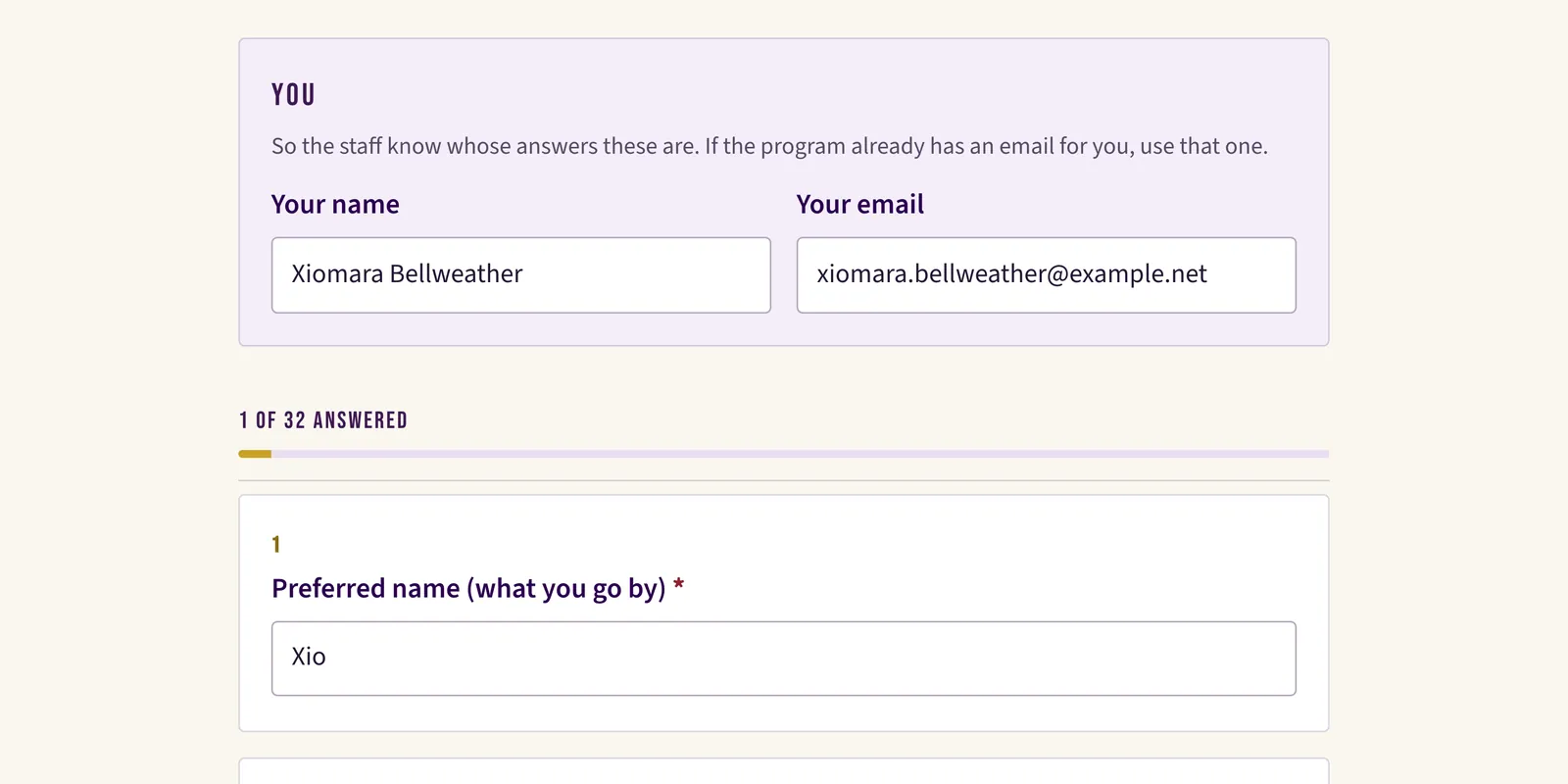 01 / 06 · The front door
Anyone can apply. No sign-in. No account.
One public form. A name, an email, 32 questions.
-
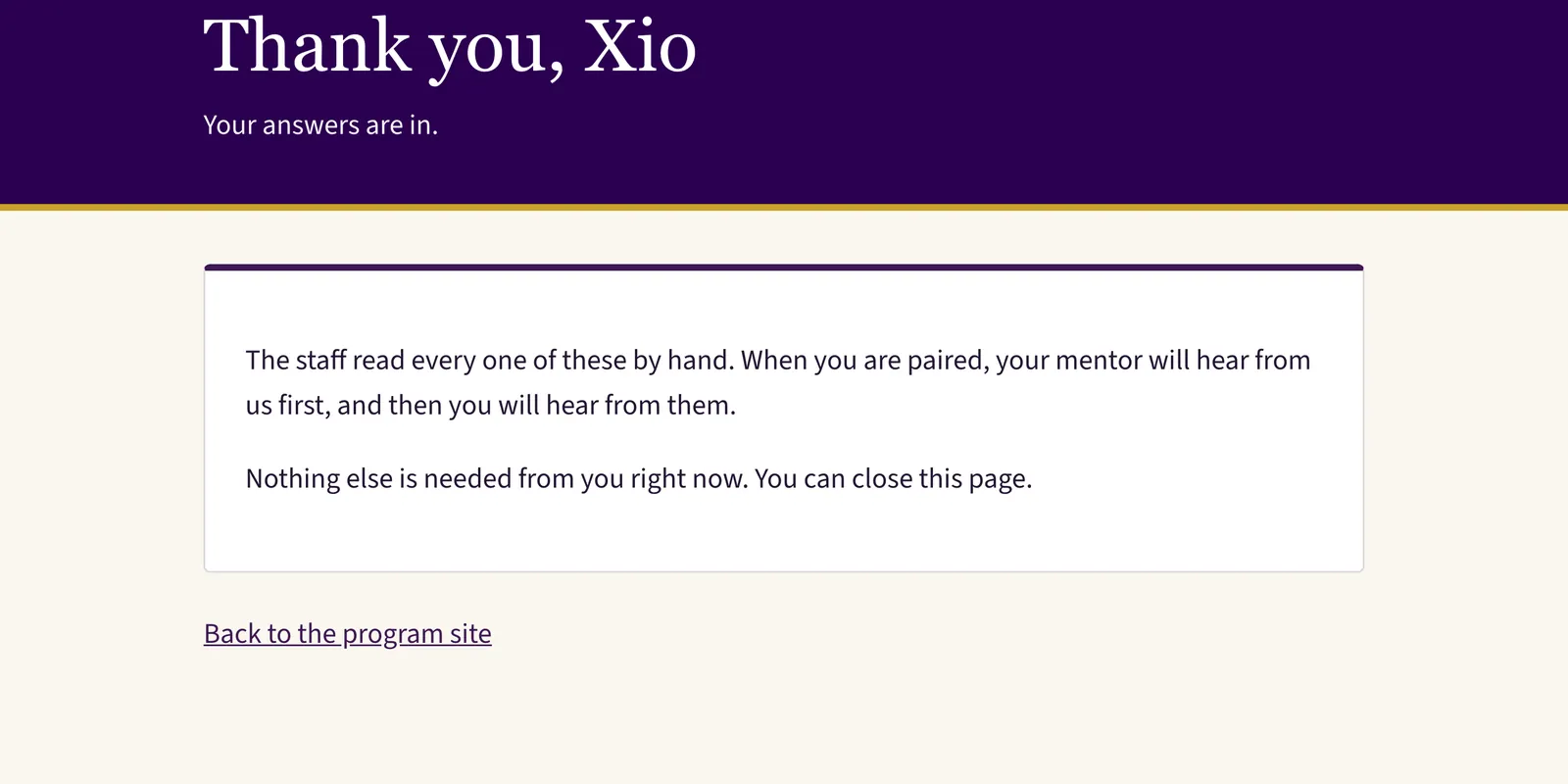 02 / 06 · An application lands
A student hits send. The answers are in.
No inbox to watch. Nothing to retype into a spreadsheet.
-
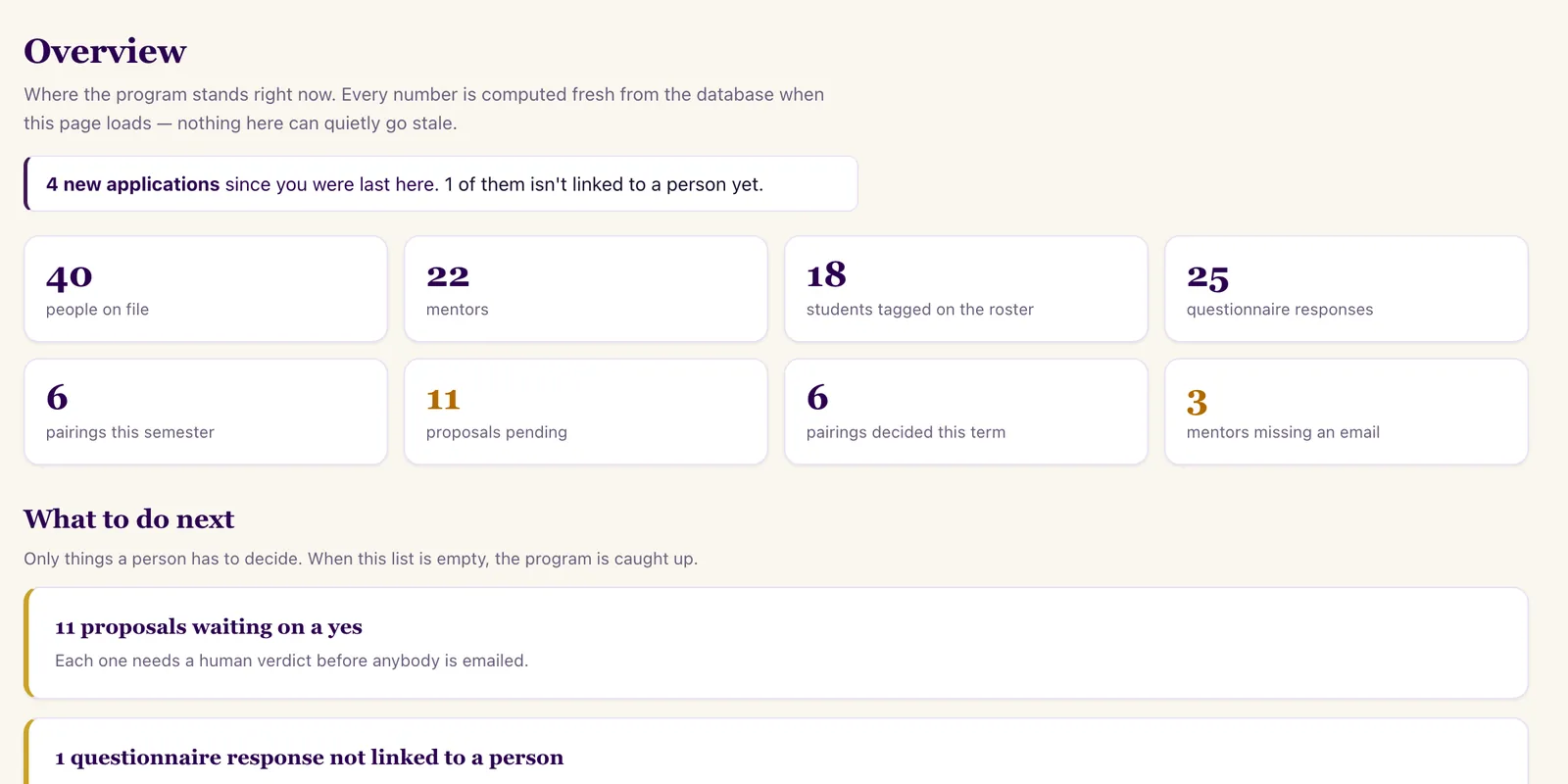 03 / 06 · The morning view
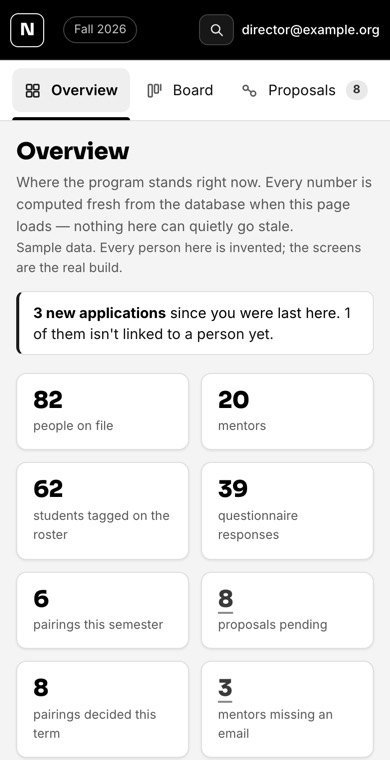
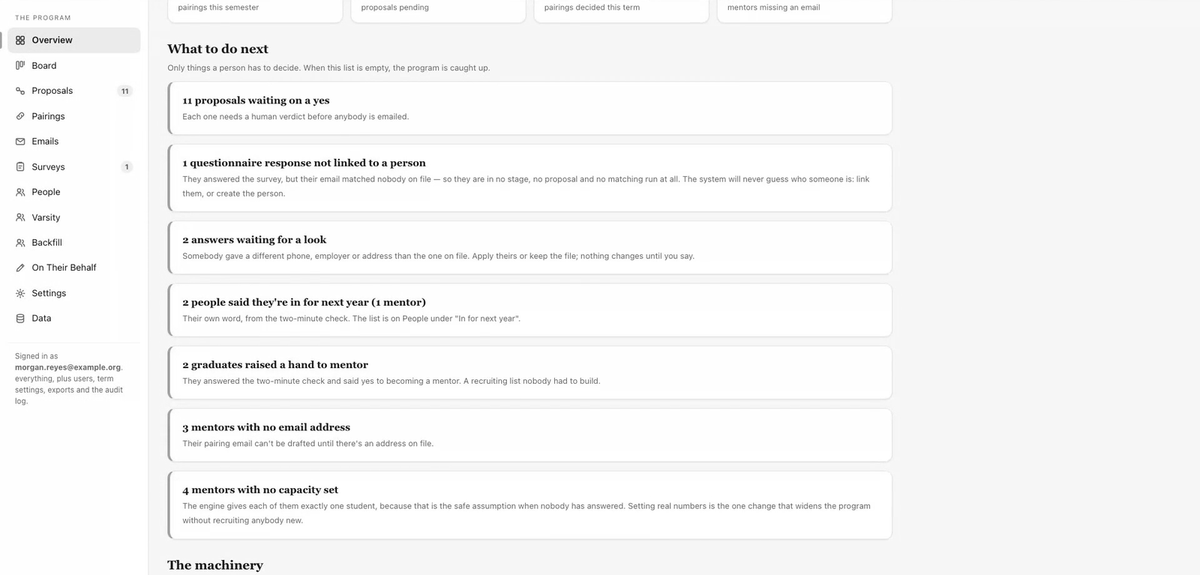
Four new applications since you were last here.
The tool keeps count so nobody has to. Every number is fresh when the page loads.
-
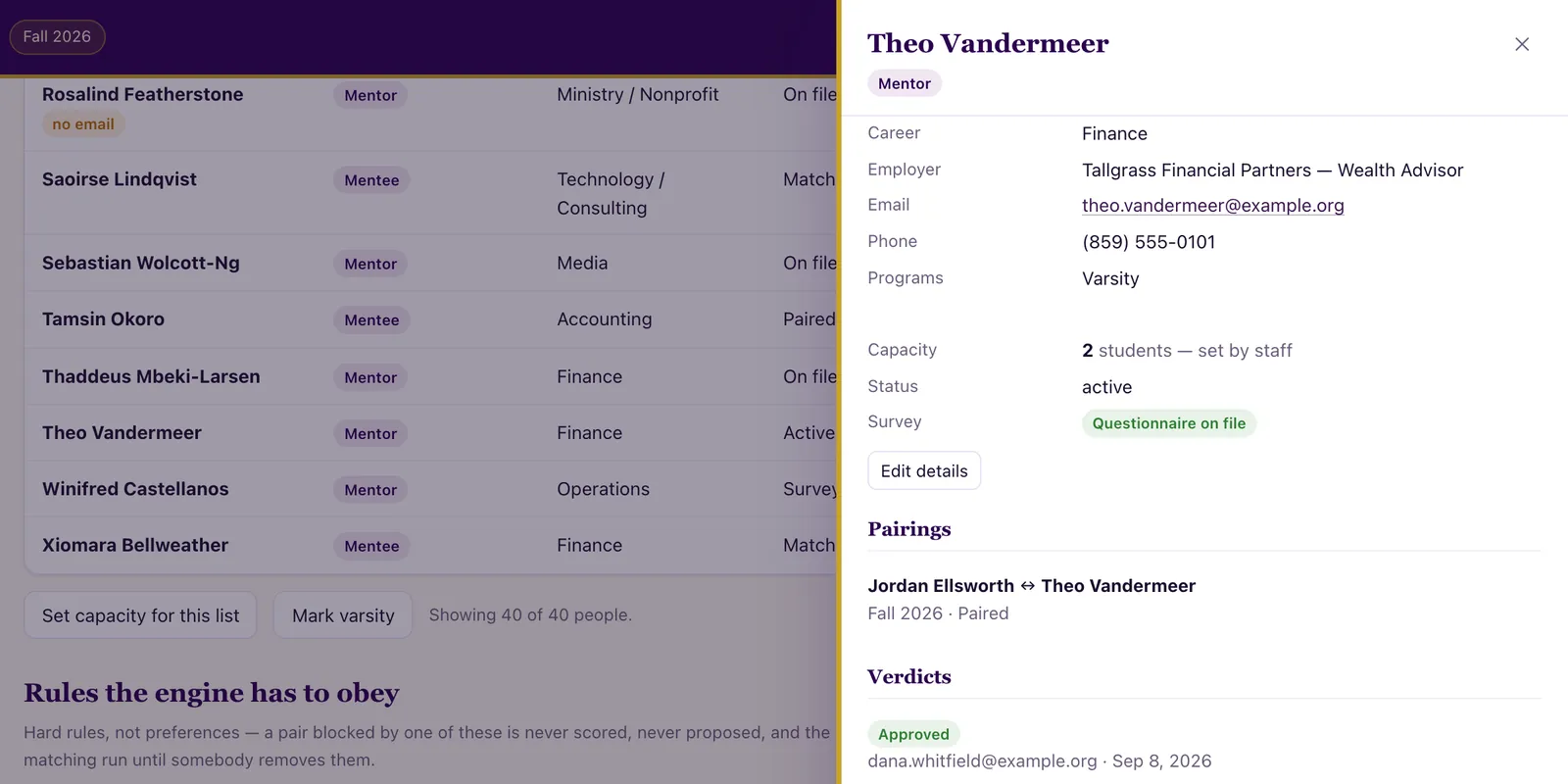 04 / 06 · One person
Every person has a card. Every pairing is on it.
Who they're matched with, who approved it, and when.
-
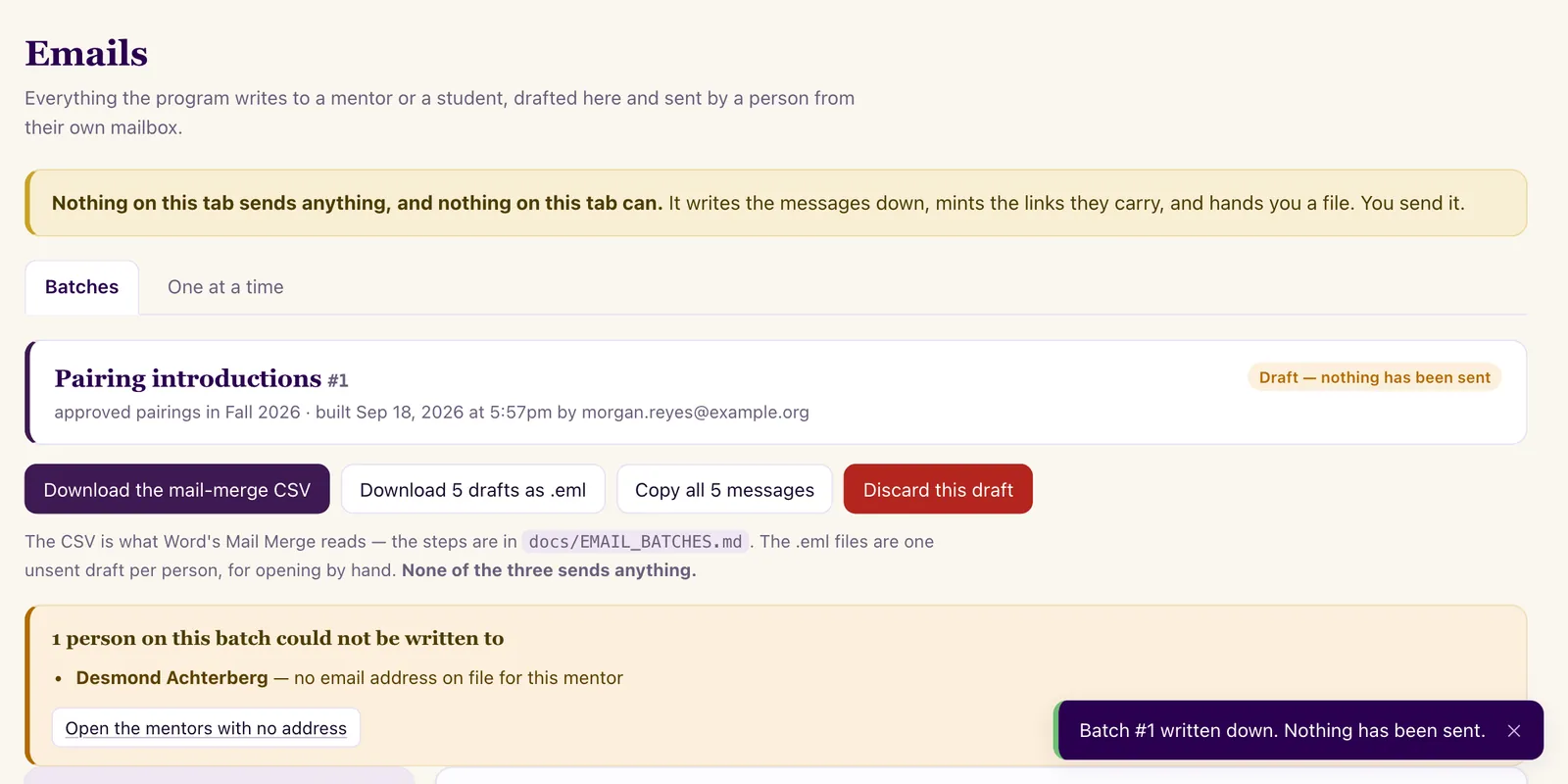 05 / 06 · The emails
It writes the batch. A person sends it.
Five messages drafted. One mentor skipped, no address on file. Nothing goes out on its own.
-
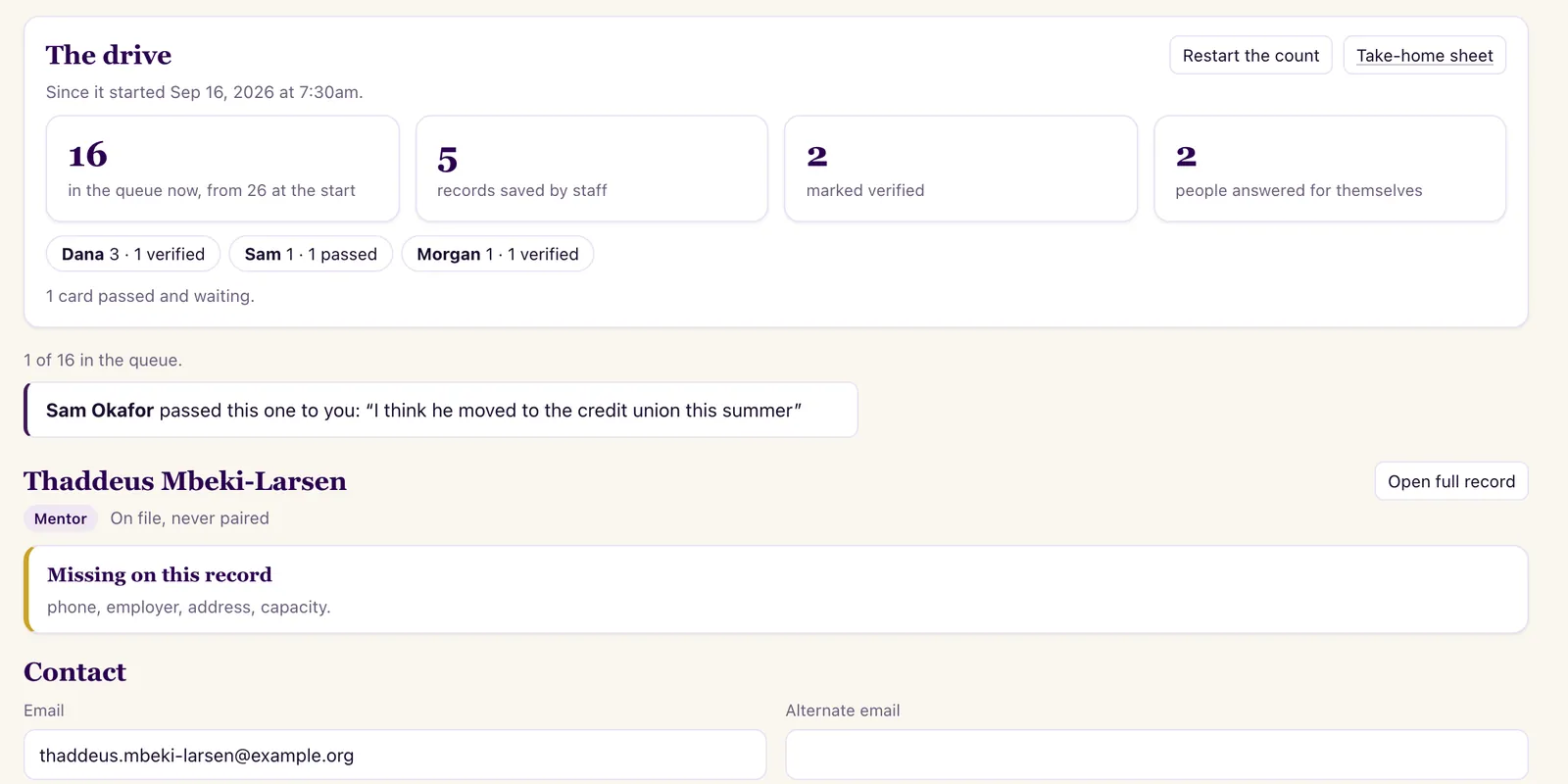 06 / 06 · The drive
Sixteen records left. Down from twenty-six.
A room of people fixing old records at once, watching the same number drop.
That's one build. Tell me about yours.
Start a project →


The real tool. Every person in it is invented.
Skip the tourDon't take the screenshots' word for it.
That same staff console, running live in your browser on invented people. Click anything. A two-minute tour shows you where to start.
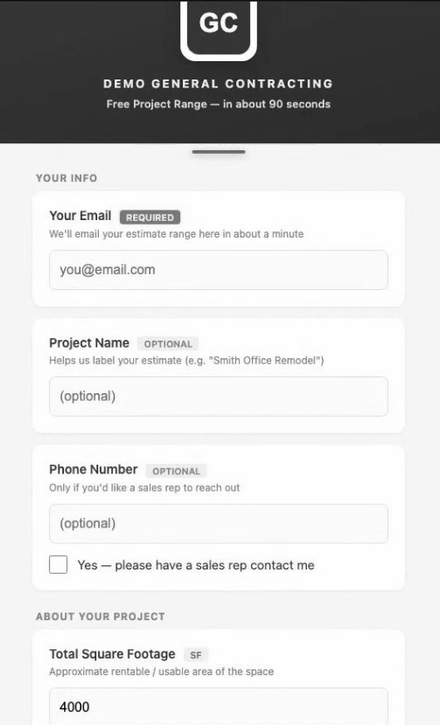
A contractor that ran on memory and paper now runs on seven tools it owns outright.
The brief: make the company run on systems instead of memory.
A small general contractor with real crews, real jobs, and real cash flow — where pricing, process, and job knowledge lived in people's heads and scattered files. The classic small-business risk: the company can't run without the owner in the room.
Weekly sit-down → build → demo → tweak. Every system came from what the team actually described needing — shown back to them working, then adjusted.
The brief: run a mentorship program on data instead of scattered lists.
A university business school's mentorship program — hundreds of mentors, mentees, and contacts living across seven disconnected spreadsheets, two professors' contact lists, and memory. Different world than a contractor; exact same disease.
1,159 people who lived in scattered spreadsheets now live on one platform the whole team logs into.
The brief: run a mentorship program on data instead of scattered lists — then make it run without the person who built it.
A university business school's mentorship program — hundreds of mentors, mentees, and contacts living across seven disconnected spreadsheets, two professors' contact lists, and memory. Different world than a contractor; exact same disease. Three chapters: the data backbone first; then, in one fixed-price month before fall classes, the matching machine on top of it; then the platform the whole team logs into.
About thirty CEOs got one private invitation, published by the client's own team from a runbook we wrote.
The brief: a front door for a private gathering, built so their own team could publish it.
A faith-and-marketplace network of CEOs was hosting a private three-day gathering overseas — about thirty invitees. They needed an invitation that felt like them, an RSVP that collected real details, and no new platform for the team to learn.